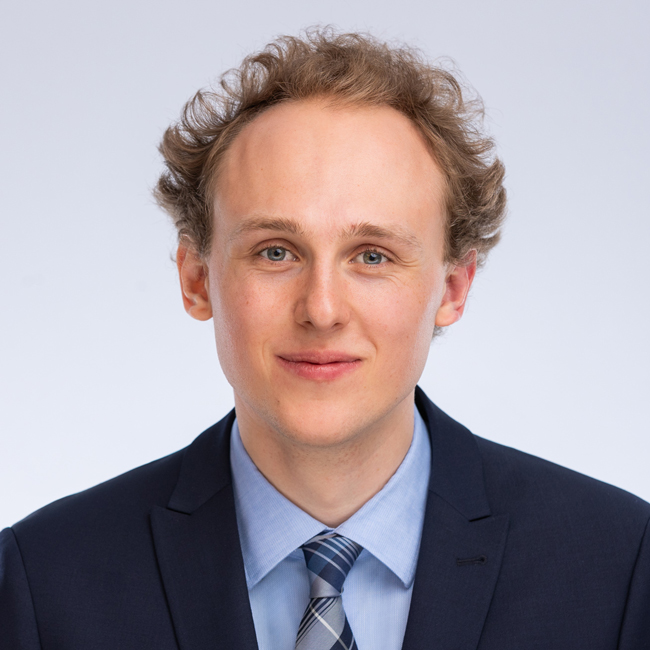
Professional Profile
Dr. Hanke is a Fellow at the Johns Hopkins Center for Health Security. His primary interests include the intersection of artificial intelligence and biotechnology, biosecurity, biosurveillance, pandemic prevention and preparedness, and biological weapon threat reduction. At the Center, his work includes comprehending the opportunities and challenges in safeguarding people’s health that arise from rapid advancements at the convergence of biology and artificial intelligence.
Dr. Hanke simultaneously serves part-time as a Fellow in the Ending Bioweapons Program at the Janne E. Nolan Center at the Council on Strategic Risks, engaging with security experts on biosecurity and bioweapons issues. Previously, he worked as a visiting researcher at the Nucleic Acid Observatory, Massachusetts Institute of Technology/SecureBio, focusing on sampling individuals for early-warning surveillance systems of pathogens with pandemic potential. He is dedicated to improving transatlantic and international cooperation in bio- and health security.
Dr. Hanke completed his medical studies at the Charité, Berlin, and the University of Tübingen, Germany, with complementary placements in the UK, Denmark, and Ghana. He is a licensed physician by the Berlin State Office for Health and Social Affairs and is set to receive his doctoral research degree in medicine from the University of Tübingen. Dr. Hanke’s academic background spans neurogenetics, neurostimulation, and molecular biology. He is an alumnus of the German Academic Scholarship Foundation.
Recent Publications
Dual-use artificial intelligence and biology: upstream risk-benefit reviews
Dual-use capabilities of concern of biological AI models
Response to NIST AI 800-1 2PD, Managing Misuse Risk for Dual-Use Foundation Models Request for Comment
Response to AISI'S RFI on Safety Considerations for Chemical and/or Biological AI Models
Response to DOE RFI on the Frontiers in AI for Science, Security, and Technology (FASST) Initiative
View all publications